

Being Important Is Not the Same as Being Chosen

Being important to someone does not mean they are choosing you. They can care about you, rely on you, text you when life feels heavy, and still avoid giving you the clarity or consistency you need. If someone keeps you close enough to feel wanted but far enough to stay unchosen, it is time to stop being available for an unclear place in their life.
Someone can care about you, miss you, rely on you, and still not choose you clearly. Chechi explains how to recognise when you are being kept as a backup option, ask for clarity, and step away without guilt.
Being important to someone does not mean they are choosing you. They can care about you, miss you, rely on you, text you when life feels heavy, and still avoid giving you the clarity, consistency, or commitment you need.
If someone keeps you close enough to feel wanted but far enough to stay unchosen, you are not confused because you are weak. You are confused because the connection keeps giving you emotional evidence without real action.
You are nobody’s waiting room, mole. If they want access to your softness, your time, your attention, and your care, they also need to meet you with clarity.
What does it mean to be someone’s backup option?
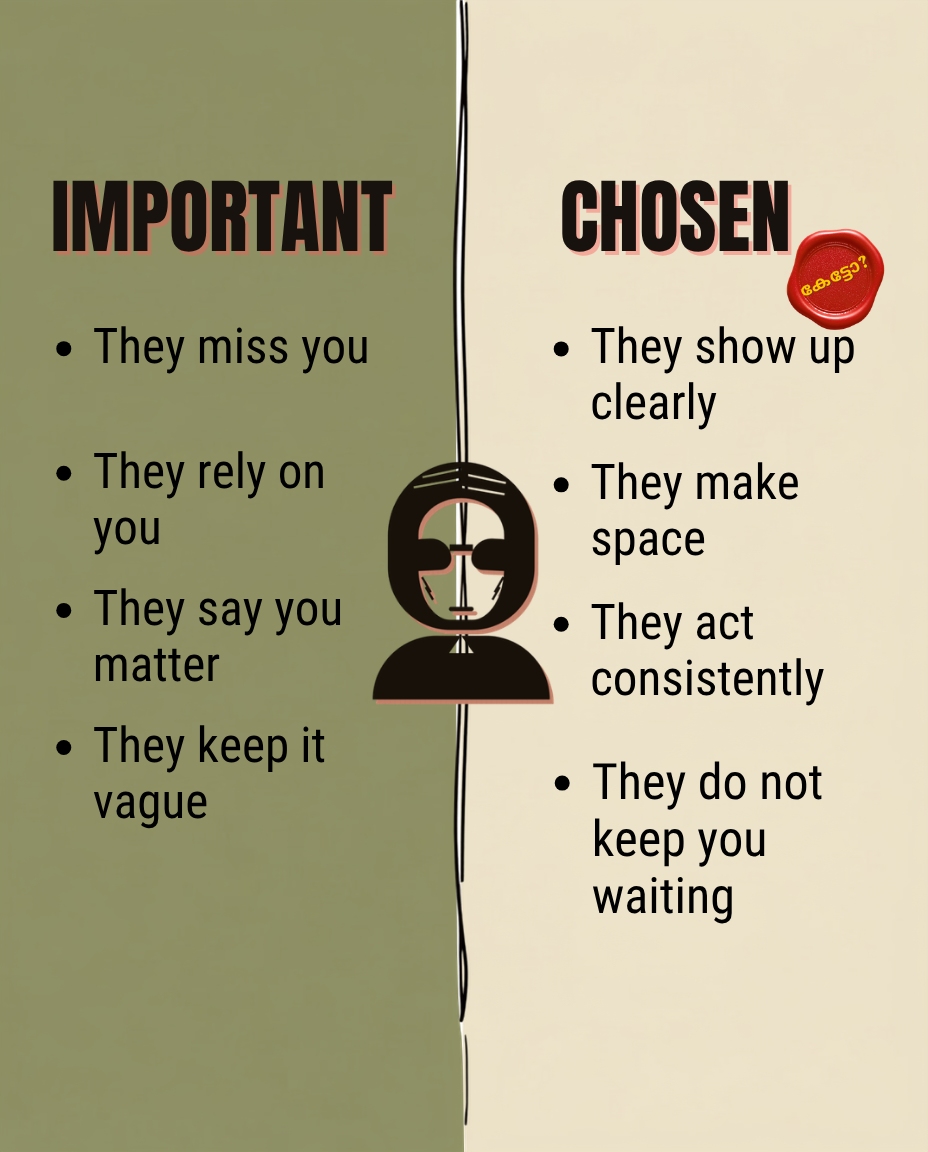
Being someone’s backup option means they keep access to you without fully choosing you.
You may be the person they call when they are lonely. The person they return to after other things do not work out. The person who understands them best, comforts them fastest, replies kindly, and makes them feel wanted without asking for too much too loudly.
From the outside, it may look like closeness. From the inside, it feels like waiting.
A backup-option dynamic can sound like:
- “You know you matter to me.”
- “I just need time.”
- “I do not want to lose you.”
- “You are different.”
- “I care about you so much.”
- “Why do we need to define everything?”
- “Can we just see where this goes?”
- “I am not ready, but I still want you in my life.”
Some of these lines may be sincere. That is what makes it harder. The problem is not always that they feel nothing. The problem is that their feelings do not become a real choice.
And mole, feelings that never become action can still keep you stuck.
How do you know you are being kept on standby?
You know you are on standby when the connection wakes up only when they need something from you.
They may disappear when life is full and return when they are bored, sad, guilty, lonely, or uncertain. They may avoid clear conversations but still dislike the idea of you moving on. They may not offer commitment, but they still react when your attention shifts elsewhere.
You may be on standby if:
- They contact you most when they are low
- They pull away when you ask for clarity
- They return whenever you begin detaching
- They call you important but do not prioritise you
- They want emotional closeness without responsibility
- They dislike losing access but avoid choosing you properly
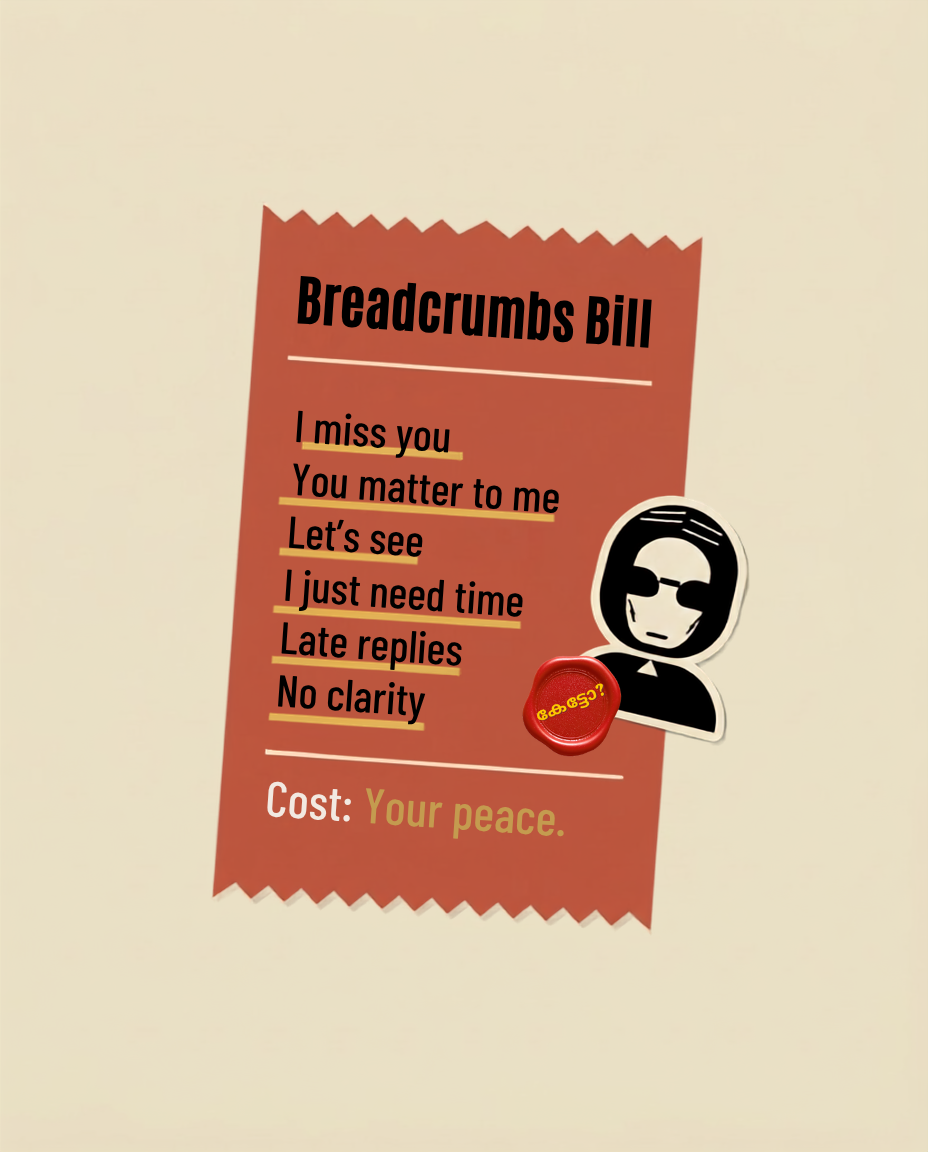
- They give just enough affection to keep hope alive
- You feel like you are always waiting for the “real” version to arrive
The biggest sign is how your body feels in the connection. Do you feel steady, seen, and secure? Or do you feel alert, hopeful, and always one message away from relief?
If your peace depends on whether they reply warmly today, this dynamic is already costing you.
Why do they keep you around if they will not choose you?
Sometimes people keep you around because you make their life easier.
You listen. You understand. You forgive. You make them feel less alone. You give them comfort without demanding the full shape of a relationship. You become the soft place they can return to when the rest of their life feels uncertain.
That does not automatically make them evil. It does make the arrangement unfair if your needs keep getting postponed.
Some people want the benefits of being loved without the responsibility of loving clearly. They want the emotional cushion, the late-night reassurance, the private closeness, the loyalty, the attention, the comfort. But when you ask where this is going, suddenly everything becomes complicated.
Chechi will say it plainly: if they have enough clarity to seek comfort from you, they can find enough clarity to be honest with you.
Confusion is real sometimes. But repeated confusion that always benefits one person and hurts the other is no longer just confusion. It is a pattern.
Why is it so hard to walk away?
It is hard to walk away because you are not only attached to what they gave you. You are attached to what almost happened.
The almost is very powerful.
Almost chosen. Almost official. Almost ready. Almost different this time. Almost the right person at the right time. Almost enough proof that you were not imagining it.
That almost can keep you waiting longer than an outright no. An outright no hurts, but it gives you a wall. An almost gives you a window. You keep looking through it.
You may also feel guilty for wanting more because they have told you that you are important. You may think, “If I matter to them, should I be patient?” Maybe. For a while. But patience without a limit becomes self-abandonment in nice clothes.
Ask yourself: “Am I waiting because this is genuinely growing, or because I am scared of what I will feel if I stop waiting?”
That answer will tell you a lot.
Is being important ever enough?
Being important is enough only when the relationship you want is also being built.
If you want a casual connection, and both of you are honest and peaceful inside that, fine. Chechi has no issue. But if you want clarity, consistency, commitment, or emotional safety, then “you are important to me” cannot be the final offer.
Importance without choice can look very convincing. They remember your favourite food. They call when something big happens. They say you understand them like nobody else. They get jealous when you pull away. They soften when they sense you leaving.
But ask the harder question: what are they actually building with you?
A person can value you and still not choose a life with you. A person can care and still keep you in the maybe pile. A person can mean every tender sentence and still not offer what you need.
Do not measure the connection only by how deeply they feel. Measure it by how clearly they show up.
What should you ask them?
Ask one clear question. Then stop turning their answer into a puzzle.
You can say:
“I care about this connection, but I do not want to stay in something unclear. Are you able to choose this properly, or do you want to keep it undefined?”
Or:
“I need consistency and clarity. If that is not what you want, I need to step back.”
Or:
“I do not want to be kept close without being chosen. What are you actually available for?”
Then listen.
Not only to the words. Listen to the pause. Listen to the discomfort. Listen to whether they give you a real answer or a fog machine.
A real answer may not be the answer you want, but it will be clear.
A fog answer sounds like:
- “Why are you pressuring this?”
- “You know how much I care.”
- “Let us not ruin what we have.”
- “I cannot promise anything right now.”
- “Why does everything need a label?”
- “I just need more time.”
More time for what? More time until when? More time while you stay available, loyal, and hopeful?
Mole, ask the question once. Do not make a career out of asking.
What if they say they do not want to lose you?
When someone says they do not want to lose you, ask what they are willing to do to keep you with care and clarity.
“I do not want to lose you” can mean many things. It can mean they love you. It can mean they enjoy your attention. It can mean they are scared of being alone. It can mean they do not want the arrangement to change because the arrangement works for them.
So do not melt only because they sound emotional.
You can reply:
“I understand, but I cannot stay in this dynamic unless there is clarity.”
Or:
“I hear you, but I need more than being important. I need to be chosen properly.”
Or:
“I do not want to keep giving access to someone who is unsure about what they want with me.”
Keep your words calm. The calmer you are, the less the conversation can drag you into proving your pain.
You are not asking them to perform a grand romantic act. You are asking them to stop benefiting from your presence while avoiding the decision that affects your heart.
How do you stop being the backup option?
You stop being the backup option by removing the benefits of access without clarity.
That does not mean you become cruel. It means you stop rewarding the same pattern that hurts you. You stop replying instantly to vague check-ins. You stop being available for emotional support after they avoid a real conversation. You stop letting them return to your life with one soft message and no changed behaviour.
Start here:
- Stop responding to breadcrumbs like they are meals
- Stop accepting “I miss you” as a plan
- Stop giving emotional labour after they avoid clarity
- Stop adjusting your needs to keep them comfortable
- Stop being warm in ways that confuse your own heart
- Stop making yourself easy to return to after they disappear
- Stop treating their uncertainty as more important than your peace
If you need to say something, say:
“I care about you, but I cannot keep being available in this unclear way. I am stepping back.”
Then actually step back.
That last part matters. A boundary is not the message you send. It is the behaviour you hold after sending it.
What does stepping back look like?
Stepping back means making your life less available to the person who keeps you waiting.
This may include fewer replies, slower replies, no late-night emotional conversations, no flirting, no private couple-like behaviour, no checking their updates, and no keeping your schedule open in case they suddenly want to see you.
If the connection has been especially painful, stepping back may mean no-contact.
If you still share work, friends, community, or responsibilities, it may mean low-contact: polite, brief, practical, and boring.
You are allowed to reduce access without making a dramatic announcement. You are allowed to stop volunteering your softness. You are allowed to become less reachable to someone who only reaches properly when they sense you leaving.
A simple stepping-back plan:
Day 1: Mute or archive the chat.
Day 2: Stop checking their social media.
Day 3: Tell one friend you are done being on standby.
Day 4: Remove reminders that keep pulling you back.
Day 5: Plan your evening before loneliness plans it for you.
Day 6: Write the full truth of the dynamic.
Day 7: Recommit to not reopening the loop.
Do not wait to feel fully ready. Readiness sometimes arrives after the door is closed.
What if they suddenly start trying?
Sudden effort is not the same as sustained change.
When you pull away, they may become attentive. They may text more. They may say the right things. They may remember your favourite details. They may act shocked that you are tired. They may call your boundary “too much” and then become sweet when that does not work.
Notice the timing.
Did they become clear because they reflected, understood, and changed? Or did they become active because they felt access slipping?
Give it time. Real change survives inconvenience. Panic-effort usually fades once you are available again.
Before trusting the new version, ask:
- Are they being specific?
- Are they taking responsibility?
- Are they offering clarity without being forced?
- Are they consistent when you are not chasing?
- Are they respecting your pace?
- Are they changing behaviour, not only tone?
Do not re-enter the same pattern because the packaging became prettier.
What if you feel guilty for leaving?
Guilt is common when you are used to being the understanding one.
You may feel like you are abandoning them. You may worry they will be lonely. You may think, “But they trust me.” You may remember the vulnerable things they shared and feel responsible for staying.
Care is beautiful. Being used as an emotional storage unit is not.
You can care about someone and still admit that the dynamic is hurting you. You can wish them well and still stop being their comfort person. You can understand their wounds and still refuse to become the bandage they never fully choose.
Their loneliness cannot be solved by your self-erasure.
If guilt comes, ask:
- Am I leaving to punish them, or to protect myself?
- Have I already communicated what I need?
- Am I staying because I want to, or because I feel responsible?
- Would I want someone I love to accept this arrangement?
Let your answer guide you.
What if you are scared nobody else will choose you?
That fear is loud, but it is not truth.
Being kept as an option can quietly damage your imagination. After a while, you start thinking this is the best you can get. You start treating small affection like a luxury. You start feeling grateful for inconsistency because at least it is not absence.
Mole, being chosen clearly is not a luxury item.

You are allowed to want someone who does not need to lose you to realise you matter. You are allowed to want someone who does not keep you emotionally close while keeping their future open. You are allowed to want the kind of connection where your needs do not feel like a disturbance.
The fear says, “What if nobody chooses me?”
Chechi asks, “What if staying here is stopping you from meeting the version of life where you are not begging to be picked?”
Do not let a half-choice block the road.
Common mistakes when you are treated like the backup option
The biggest mistake is accepting emotional intensity as proof of commitment.
They may say deep things. They may share private pain. They may call you their safe place. They may act jealous. They may come back again and again. None of that automatically means they are choosing you.
Other common mistakes:
- Replying warmly every time they return
- Confusing jealousy with commitment
- Accepting “you matter” instead of clarity
- Staying available because you fear losing the connection
- Letting guilt override your needs
- Waiting for them to become ready with no timeline
- Treating mixed signals as mystery instead of inconsistency
- Believing potential more than behaviour
You do not need to become hard. You need to become unavailable for the version of closeness that keeps you small.
A simple plan to stop being the backup option
Use this if you know you are tired but keep getting pulled back.
Step 1: Name the pattern
Write it honestly: “I am being kept close without being clearly chosen.”
Step 2: Name what you want
Clarity, commitment, consistency, honesty, distance, friendship, closure. Whatever it is, say it plainly to yourself first.
Step 3: Ask once
Have one clear conversation if you have not already. Do not soften the question so much that they can escape it.
Step 4: Believe the answer
A vague answer is still an answer. Avoided clarity is still information.
Step 5: Remove the benefits of unclear access
No late-night comfort, no couple-like behaviour, no emotional labour, no instant replies to breadcrumbs.
Step 6: Create distance
Mute, archive, block, reduce contact, or go no-contact if needed.
Step 7: Build your life louder than the waiting
Make plans. See friends. Return to routines. Fill your evenings with something other than checking whether they remembered you.
Step 8: Do not negotiate with loneliness
Missing them does not mean the old arrangement was enough. It means you are adjusting to the space where waiting used to live.

More from Chechi
-
Being Important Is Not the Same as Being Chosen
Someone can care about you, miss you, rely on you, and still not choose you clearly. Chechi explains how to recognise when you are being kept as a backup option, ask for clarity, and step away without guilt.
-
The Breakup Recovery Timeline Nobody Gives You
Breakup recovery is not a neat 30-day challenge. Chechi walks you through what the first days, weeks, and months can actually feel like, and how to stop organising your life around him.
-
How to Go No-Contact and Actually Stick to It
No-contact is not about proving a point. It is about giving yourself enough distance to stop reopening the same wound. Chechi explains when to go no-contact, what to block, what to do when he texts, and how to stay steady when you miss him.