

The Manosphere Doesn’t Just Sell Misogyny. It Sells Belonging.
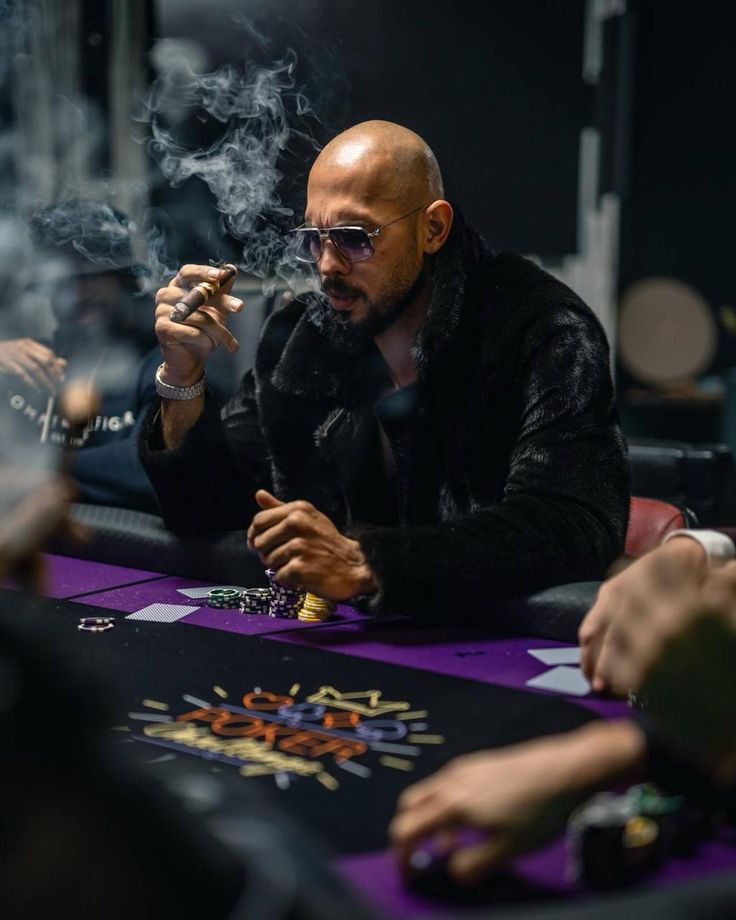
The manosphere works because the problem it speaks to is real. Many young Indian men are lonely, financially anxious and under enormous pressure to provide. What the manosphere does is turn that pain into a funnel: offer an explanation, identify someone to blame, provide a community, then sell the solution.
Young men are lonely. They are anxious about money, work and what being a man is supposed to mean now. And an entire online economy has figured out how to turn that uncertainty into subscriptions, supplements, coaching programmes and resentment.
Content note: this post discusses misogyny, online harassment, and men's suicide statistics. Please skip or save it for later if that feels better for your nervous system today.
He was fine two years ago. Now he says things at dinner that make your mother go quiet.
Every woman I hear from about this describes the same slow slide, and every one of them thinks it happened to her family specifically.
It didn't. There is a route, it is well mapped, and there is a price list at the end of it.
A 150-page report published this month by Reset Tech and Equimundo, called The Grift Economy: How Young Men Are Being Sold Fake Belonging and Fake Wealth Online, follows the money. Its finding is not that a lot of men have become sexist online. It is that masculinity has been turned into a commercial category, built and curated and financially incentivised, and that the loneliness of young men is the raw material.
The funnel
It does not start with women. This is the part people get wrong, and getting it wrong is why every intervention fails.
It starts with a boy searching for something ordinary. How to get better at the gym. How to talk to a girl he likes. How to make money. Nothing about any of that is sinister, and the search is often a sign that he is trying.
The algorithm registers the vulnerability. That is its actual job. And once it knows what he is worried about, the feed shifts. He starts getting explanations. Why he's struggling. Why it isn't his fault. Why the rules changed on him. These begin as personal stories and harden into a theory, and the theory is satisfying because it is the first thing anybody has said to him that acknowledges he is having a hard time.
Then he is invited in. There is a community of men who understand. And to keep learning, to actually transform his life the way the video promised, he has to pay.
The report's phrase for the machinery is worth sitting with: paid communities, unregulated supplements, crypto schemes, and high-ticket coaching programmes. Recycled content. Affiliate pyramids. Cancellation processes designed to be difficult. Testimonials that are not real.
The numbers
The report estimates that one manosphere figure, Andrew Tate, takes roughly $184 million in annual gross revenue from a single subscription education platform charging $99 a month. Top-tier streamers in this ecosystem are estimated to earn between $30,000 and $50,000 an hour from streaming alone. The biggest podcast names in the adjacent space command speaking fees north of $200,000. Leading manosphere creators, across platform payouts, sponsorships and deals, are estimated to pull somewhere between $1 million and $10 million.
Ninety-nine dollars a month is about eight and a half thousand rupees. From a boy who is telling you the economy is rigged against him.
Gary Barker, who runs Equimundo, put it plainly: these men are being duped, and they deserve straight information about products that do what they claim rather than being swindled out of their money.
How real pain gets converted into a target
The clever bit, the bit that makes it a business rather than a hobby, is the conversion step.
The study documents a verified business account on X that took real economic data and used it to falsely claim that youth unemployment is only hurting men. Take a genuine, documented, painful fact. Attach a false exclusivity to it. Now the pain has a villain.
The researchers describe this as turning economic anxiety, which is real, into resentment with named targets: women, immigrants, foreign workers.
And in India the underlying anxiety is not imaginary. Youth unemployment sits around 15 percent, roughly three times the national rate, and it is worst among the educated: 29.1 percent for university graduates. A young man with a degree, no job, and a family who expects him to be the provider is not confused about whether life is hard. He is correct. He is then handed a diagnosis that is a sales pitch.
The Indian version
The manosphere is not a Western import anymore, and pretending it is only delays us.
In India it operates largely behind pseudonymous handles, stock photographs and animated avatars. Researchers studying the Hindi-language manosphere have traced its overlaps with Hindutva and anti-Western narratives, and mapped distinct communities within it, including one that folds hostility toward women into self-improvement content, and one organised around surveilling and harassing interfaith couples.
The flashpoints here have a pattern. Every high-profile case in which a woman is accused of harming a man becomes fuel. The abuse campaign against Rhea Chakraborty in 2020 is the one most often cited as the moment the Indian manosphere found its voice, and each subsequent case has widened the pipe. The stated purpose is justice for one man. The actual output is a general argument that women's rights went too far and the hierarchy needs restoring.
The Cockroach Janta Party protests started over a leaked exam paper and grew into some of the largest anti-government demonstrations India has seen in years. Students filled Jantar Mantar. The movement ran on Instagram as much as on marches, all reels and memes and protest songs. On 20 July, police used tear gas and baton charges on people marching toward Parliament. The protest was withdrawn on 25 July. The education minister resigned. By any ordinary measure, it worked.
Three days after it ended, the women who had been there started getting hunted.
Accounts began circulating cropped and AI-manipulated photographs of young women who had attended, captioned with instructions to identify them. "Find her. She abused Prime Minister Narendra Modi." One Hindutva handle tagged Delhi Police under a woman's photograph and asked them to send her to jail and teach her a lesson. A Member of Parliament called the protesters "Generation Gutter."
A 23-year-old yoga instructor who had filmed police personnel at the protest told Newslaundry she is now getting rape and death threats, that the abuse has spread to her mother's accounts, that she has stopped leaving her house and has lost most of her clients. Her words: it feels as though her career is over. The abuse now runs in the comments under her yoga videos, left by people who used to follow her for yoga.
The BBC spoke to four women who had posted about the protests, keeping their names out to protect them. One of them was slut-shamed for questioning the Prime Minister's remarks after it ended. A zero FIR was filed in Noida on 29 July against a woman whose video had spread widely, by a Supreme Court lawyer who also holds office in a political party's women's wing; it was later withdrawn. A fifteen-year-old girl's clip went through the same machine.
Who organised it is contested, and I am going to be careful here. Opposition figures and writers have pointed at the BJP's IT cell. The accounts doing it say they are not targeting women at all, only calling out everyone who used abusive language, and that the reporting on them is itself doxxing. The Supreme Court has since directed authorities not to take coercive action against protesters with no prior criminal record.
But you do not need to settle the question of who gave the order to notice the thing that matters for this article.
Nobody had to build that mob. It was already assembled, already fluent, already holding opinions about what happens to a woman who speaks in public. Years of content had trained a very large audience in one grammar: that women's gains are thefts, that a woman with a microphone is a provocation, that her body is the fastest route to discrediting her argument. That audience does not switch off when the subject changes from dating to exam papers. It only needs a direction.
Gurmehar Kaur made a point about this that I have not stopped thinking about. This was the first mass youth mobilisation in India since the CAA-NRC protests. The 15- to 20-year-olds at Jantar Mantar were eight or nine years old the last time this playbook ran. They had heard about it. They had never had it aimed at them.
And here is the tell, the thing that gives the whole business away. The pitch that brought these men in was that they are the forgotten ones. Nobody defends them. Nobody asks how they are. Nobody is on their side.
Then they got a moment of collective power, and they spent it on a schoolgirl and a yoga teacher's mother.
What young Indian men are actually saying
In March 2026, researchers at the Harvard Kennedy School surveyed 1,254 Indian men aged 18 to 30 and analysed over 6,000 YouTube video transcripts and 808,000 comments for the Centre for Men and Boys.
The loneliness is not a metaphor.
- 58 percent agreed with the statement "no one really knows me."
- About half said they had felt down, depressed or hopeless in the previous two weeks.
- 83 percent agreed that men don't fail to feel pain, they fail to show it, because the whole house rests on their shoulders.
- 76 percent said it is harder for their generation to feel financially secure than it was for their fathers'.
And the attitudes have moved with it.
- 68 percent agreed that efforts to promote women's equality have gone so far that men are now discriminated against.
- 62 percent agreed men have more right to a job when jobs are scarce.
- 57 percent agreed with the line "If alimony is correct, then so is dowry. Future insurance!"
Men account for 70 to 75 percent of suicides recorded by the NCRB. The researchers note the measurement caveats, including likely underreporting of women's suicides, and I will note them too. But the shape of it is not in dispute. And in a country where interviewees estimated that only 5 to 10 percent of practising psychologists are men, a boy who has been told his whole life that therapy is a foreign concept is not likely to find a room that feels like his.
The thing they got wrong about each other
Here is where the study turned, and where I want you to stop reading defensively.
The researchers tested whether these men correctly guess what other men their age believe. They mostly don't.
Seventy-nine percent of them agreed that changing a nappy doesn't make you less of a man. But the average respondent guessed that only 67 percent of his peers would agree. Sixty-eight percent said that letting go of the pressure to be perfect and showing vulnerability had improved their relationship.
So a very large share of young Indian men privately want to be soft with their children and honest with their partners, and each one believes he is more unusual in this than he is. He is performing hardness for an audience of men who are also performing hardness, each of them convinced the others mean it.
The researchers also found that the manosphere creators these men were asked about were among the most distrusted figures in the whole list. Their engagement numbers are enormous. Their credibility is not. Which means the influence is smaller than the noise implies, and the noise is doing a lot of work.
I want to be honest about the limits. This survey is not population-representative; it skews urban and college-educated, and it measures association, not cause. And the researchers found no such misperception gap on the questions about men's economic and physical control over women. On those, men correctly guessed where their peers stood. So this is not a story where everybody secretly agrees with you. It is a story where there is one specific door propped open, around caregiving and emotional honesty, and it is wider than anybody in the room thinks.
If this is happening in your house
A few things, and then I'll stop.
You are not his de-radicalisation programme. I need this said first, because the entire cultural instinct is to hand this job to women, and I refuse. His loneliness is real and it is not your assignment. You did not build the funnel and you are not obliged to disassemble it with your bare hands while he tests his new opinions on you at dinner.
Arguing with the ideology feeds it. The theory he has been given already explains you. Every counter-argument you make was pre-loaded as evidence. Fighting the content is a losing game because you are debating a script that was written with you in the room.
Aim at the loneliness, not the politics. "Who do you actually talk to?" is a better question than anything about feminism. If the honest answer is a paid Discord, you have located the problem, and it is not an opinion.
Know where the line is. If this has stopped being opinions and started being surveillance, control over money, control over your movement, or threats, that is not a content problem and it is not something to be talked through. That is safety, and it needs someone outside the house.
The last thing. If you are a man reading this, and you have felt the pull of it, I am not writing this to catch you out. You were sold something at a moment when you were genuinely struggling and nobody else was offering. That is not stupidity. That is a market working exactly as designed.
But your friends agree with you more than you think. The room is softer than it looks from inside it. And nobody who actually loves you has ever charged you a monthly fee.
This topic can overlap with trauma. A trauma-informed therapist or counsellor may be a safer next step than trying to navigate this alone. If you are in India, iCall (icall.tiss.edu) offers sliding-scale counselling, Tele-MANAS can be reached on 14416, and the Vandrevala Foundation runs a free 24/7 line on 1860-2662-345.
If what you are dealing with at home involves coercion, financial control, surveillance or threats, please reach out to a local legal support service or a trusted crisis resource. Laws and options vary by state.
Sources
Primary
- Reset Tech and Equimundo, The Grift Economy: How Young Men Are Being Sold Fake Belonging and Fake Wealth Online (2026). Source of every revenue figure in the piece, the funnel description, and the X-account example — https://www.equimundo.org/resources/the-grift-economy
- Andrea Salazar-Diaz and Stephanie Wu, Rethinking Masculinity Norms in India, Harvard Kennedy School SYPA for the Centre for Men and Boys, 11 March 2026. Source of every Indian survey statistic, the pluralistic-ignorance finding, the distrust finding, and the male-therapist shortage estimate. Survey n=1,254 men aged 18–30, plus 6,551 YouTube transcripts and 808,719 comments — https://www.hks.harvard.edu/sites/default/files/WAPPP/Rethinking_masculinity_norms_in_India_Salazar_Diaz_Wu.pdf
- Sagrika Kissu, The manosphere built a multi-million-dollar business by monetising male loneliness, ThePrint, 8 August 2026. The news peg, and the Gary Barker quote — https://theprint.in/feature/the-manosphere-built-a-multi-million-dollar-business-by-monetising-male-loneliness/3009252/
On the Indian manosphere
- Hussain, S. and Maloney, M. (2025), Online misogyny and pedagogies of Hindutva digital subjectivation: reflections from the Indian manosphere, Gender and Education — https://doi.org/10.1080/09540253.2025.2568399
- ThePrint, Inside India's manosphere: Rhea Chakraborty sparked it, Siya Goyal is firing it up — https://theprint.in/ground-reports/inside-indias-manosphere-rhea-chakraborty-sparked-it-siya-ketan-goyal-murder-case-is-firing-it-up/2980635/
- UN Women, What is the manosphere and why should we care? (May 2025). Useful plain-language explainer if you want a link for readers — https://www.unwomen.org/en/articles/explainer/what-is-the-manosphere-and-why-should-we-care
- Equimundo, The Manosphere, Rewired: Understanding Masculinities Online & Pathways for Healthy Connection (2024). The predecessor report to The Grift Economy https://www.equimundo.org/wp-content/uploads/2024/06/Manosphere-Rewired.pdf
On the targeting of women after the CJP protests - BBC News, 'I was slut-shamed' — Indian women 'cockroach' protesters doxxed and abused (August 2026). The BBC spoke to four women and reviewed screenshots; names withheld. Syndicated copy — https://www.yahoo.com/news/world/articles/slut-shamed-indian-women-cockroach-222836622.html
- Newslaundry, 'Feels like career over': The online campaign to intimidate women part of CJP protest (3 August 2026). Source of the yoga instructor's account and the Noida zero FIR details — https://www.newslaundry.com/2026/08/03/feels-like-career-over-the-online-campaign-to-intimidate-women-part-of-cjp-protest
- ThePrint, Photos of women from CJP protests morphed, circulated. They're facing arrest calls (July 2026). Source of the "Find her" captions and the AI-manipulated images — https://theprint.in/feature/women-photos-cjp-protests-arrest-calls/2999382/
- ThePrint, A sinister doxxing campaign is targeting women protesters (August 2026). Source of the Gurmehar Kaur quote about the CAA-NRC generation gap, and of the lawyer's own account of how the FIR was filed. The comment thread under it also shows the counter-position, which is why the article states it — https://theprint.in/india/a-sinister-doxxing-campaign-is-targeting-women-protesters-social-media-stalkers-vigilante-counselors/3004521/
- ThePrint, Delhi, Mumbai, Kolkata — women are facing ugly pushback after CJP protests (August 2026) — https://theprint.in/ground-reports/women-are-facing-ugly-pushback-after-cjp-protests/3003394/
- Siasat, FIRs, doxxing: Hindutva X handles target CJP women protesters (August 2026), reporting The Wire Hindi's coverage, including the "teach her a lesson" post and the CJP spokesperson's response — https://www.siasat.com/firs-doxxing-hindutva-x-handles-target-cjp-women-protesters-3517265/
- BBC News, Youth protests have weakened Modi, Indian activist who went on hunger strike tells BBC (August 2026), for the timeline, the education minister's resignation, and the Supreme Court direction on coercive action — https://www.yahoo.com/news/politics/articles/youth-protests-weakened-modi-indian-183852134.html
Supporting data
- CMIE, Economic Outlook (2025), for the ~15% youth unemployment rate — https://indiamacroindicators.co.in/resources/blogs/indias-unemployment-rate-in-2025
Crisis resources referenced
- iCall — https://icall.tiss.edu
- Tele-MANAS — 14416 or 1-800-891-4416

More from Chechi
-
"All You Have To Do Is Ask" Is Not the Flex He Thinks It Is
Your father waits for tea. Your brother waits for someone to clear his plate. Your husband asks if you have made the grocery list. Nobody thinks they are doing anything, which is exactly what makes it so hard to argue about.
-
You Stop Performing: The Biggest Sign You're In The Right Relationship
The clearest sign of a healthy relationship is not perfect communication or constant romance. It is being able to stop performing and feel safe being completely, imperfectly yourself.
-
Why Is It So Hard to Make Friends as an Adult?
Belonging used to arrive with your life: cousins, neighbours, the aunty who walked in without knocking. Now you have to build it yourself, and nobody handed you the manual. Chechi explains what actually changed, why the festival-for-the-gram version doesn't count, and the small, unglamorous moves that turn strangers into your people.