
Too Indian for Tinder, Too Western for Shaadi.com
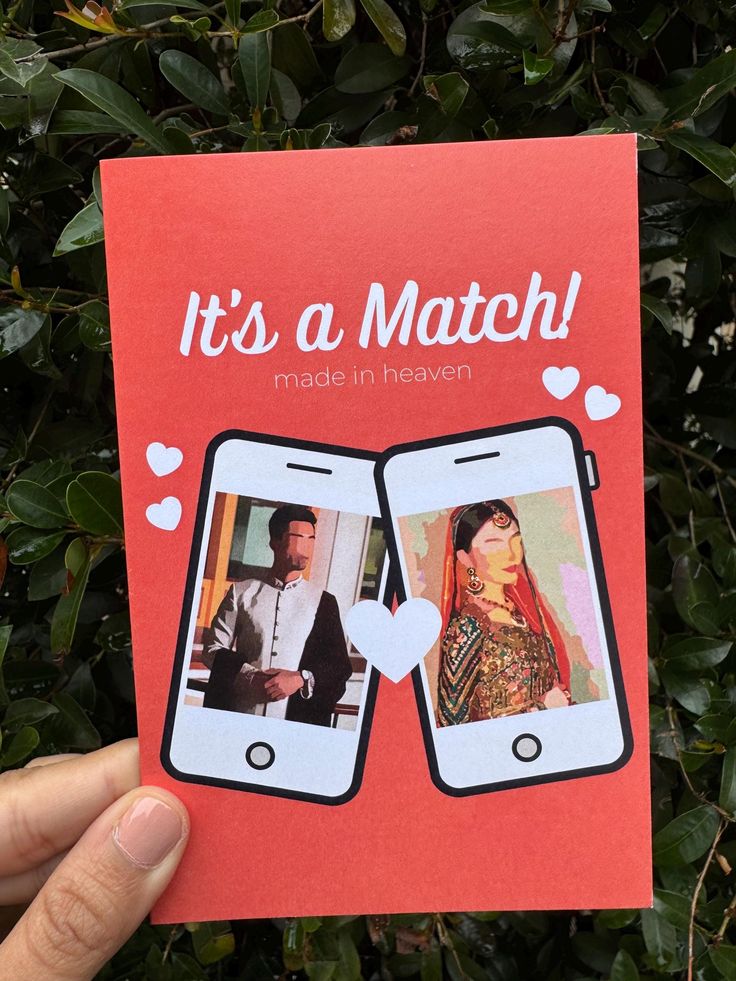
Being an unmarried Indian woman often means living two lives: one where you are an adult making your own choices, and one where your family still treats your love life like a public committee matter. Whether you live abroad, near your parents, or inside your childhood home, the pressure often follows the same rulebook. The answer is not to let Tinder make you disposable, Shaadi.com make you a product, or guilt choose your partner. Go slowly, ask honestly, and choose a love that knows where you come from without trapping you there.
For the unmarried Indian woman dating between apps, family calls, biodatas, guilt, and “what will people say?” This is about the daughter split: adult in your own life, still on probation inside the family system.
There is a special kind of confusion that comes with being an unmarried Indian woman. You might live in Toronto, or in a flat ten minutes from your parents, or in your childhood bedroom with your school certificates still on the wall. The geography changes. The situation doesn't.
You earn your own money, go on dates, hold firm opinions on therapy, politics, and oat milk.
Then Amma calls, or walks into the kitchen, and suddenly you are fourteen.
"Who is that in the photo?" "Are you eating properly?" "One nice boy's family asked." "You are not getting younger." "We are not forcing you, but just see the profile." "What will people say?"
And there it is, the great daughter split. In your own life you are an adult. Inside the family system you are still someone's daughter on probation. Too Indian for Tinder, too Western for Shaadi.com, and tired on both apps.
The daughter tax
Here is something your brother or your male cousins may never fully understand. Sons get to grow up. Daughters get assigned culture-keeping duty.
He can date quietly for years and nobody asks. Your relationship status is a standing agenda item on every family call. He brings home someone unexpected and the family "adjusts." You bring home someone unexpected and it becomes a two-year diplomatic crisis with your mother's blood pressure as the hostage. His thirties are a career. Your thirties are a countdown that aunties narrate out loud, in public, at other people's weddings.
Chechi is not saying this to make you bitter. She is saying it so you stop wondering whether the pressure is in your head. It isn't, edi. The scale was never balanced. You are dating with a weight your brother never had to carry, and naming the weight is the first step to putting some of it down.
Distance changes the enforcement, not the rules
The daughter living abroad and the daughter living down the road are running the same rulebook with different policing.
Abroad, the surveillance is emotional. Nobody can see you, so guilt does the monitoring. You edit your life for the Sunday call, crop your photos, and go home in December to perform a single, simple version of yourself.
Nearby, the surveillance is live. "Reached home?" texts at 9 pm. A curfew at 28. Neighbours who file reports faster than any app. Your building watchman knows your dating history better than your best friend does. You are an adult with a salary and a manager, and you are also explaining to your father why the cab took the long route.
At home, there is no gap at all. Your two lives share a corridor. The phone goes face-down on the dining table, the calls happen from the terrace, and the relationship exists in the hours between "going out with friends" and "reached, don't wait up."
Different enforcement, same charge sheet. So if you've ever thought "if only I lived abroad, I'd be free" or "if only I lived at home, I wouldn't feel this guilt," Chechi has news. The daughters on the other side of that fence are writing to her too.
The two lives problem
However far you live, dating as an Indian daughter usually means running two emotional lives in parallel.
In one, you're free. You meet people through apps, friends, work, and one man you should not have texted again. In the other, your family is holding a future that looks familiar to them: same community, same language, maybe same religion, same idea of a respectable daughter-in-law. Their dream comes from love, fear, and control in a mixture nobody has ever measured precisely. And most of the rules in it were written for you, not your brother.
So you're trying to live in a world that says choose yourself, while your family training whispers that a good daughter doesn't. No wonder the apps feel exhausting. You're not swiping; you're negotiating between two governments, and one of them raised you.
Tinder self versus family self
On the apps you might be bold, funny, picky, experimental. At the dining table, or on the Sunday call, you become careful, edited, vague.
"Are you seeing anyone?" "No, not really."
Not really means yes. No means complicated. Single means please do not start.
The double life gets heavy over time. You might hide a relationship for years, or date only within the community because explaining is exhausting, or avoid the community entirely because gossip travels faster than broadband and a woman's version of the story always arrives worse. And under all of it sits the special daughter bonus: guilt about disappointing parents who gave you so much, plus the knowledge that in your family's ledger, a daughter's choices reflect on everyone.
That guilt is powerful, but guilt was never the same thing as guidance. Sometimes it's just old programming with emotional background music.
The liberal Indian boy
Chechi must discuss a specific character now, because you will meet him. He exists in Koramangala, in Jersey City, in Powai, and in every city with brunch.
He is liberal at that brunch. He reposts feminist content. He splits the bill, respects your career, and speaks fluently about generational trauma. Then his mother calls, and you watch a software update happen in real time. Suddenly he is not sure his family would accept you. Suddenly the future involves you adjusting. Suddenly the woman he marries should probably know how to manage his parents, and he says "manage" the way HR says "restructuring."
Some of these men want a partner. Some want a modern girlfriend for now and a traditional wife later, and they are recruiting for both positions simultaneously without telling either candidate.
So watch for the gap between his politics and his plans. Ask how he talks about his mother, his sister, his female colleagues. Ask what happened to his last relationship, and listen for whether a woman got quietly sacrificed to family approval. His values are not what he posts, edi. His values are what he defends when his family pushes back.
Dating outside the script
Maybe he is a different religion. A different caste. A different language, region, or country. Maybe he is not a he. Whatever the script your family wrote, dating outside it does not make you a traitor, whatever the aunty network implies.
It does raise real questions worth asking early. Does this person respect where you come from, or find it exotic? Are they curious without appointing you their personal culture explainer? Can they handle family complexity without mocking it, and do they understand that "just tell your parents" is not a two-minute fix but a request to renegotiate your entire childhood? Will they honour your food, festivals, grief, and contradictions rather than perform interest in them?
And check your side of the ledger too. If your family pressure is intense, tell them. Not on date one with a PowerPoint, but before things get serious, because they deserve to know the world they are entering, and you deserve to see early whether they can stand in it without flinching.
Shaadi.com panic
Matrimonial platforms aren't automatically the enemy; some women know what they want and use them well. But if opening the profile makes you feel like livestock at an education fair, pause. Notice how the format treats you: your age displayed like an expiry date, your complexion listed as a feature, your career reframed as "well settled" for someone else's benefit.
You're allowed to use these platforms with boundaries. State what you want, reject freely, ask direct questions, move slowly, and stop entirely if it turns dehumanising. You are not a deadline, and you are not a profile managed by committee.
A few questions for yourself
What kind of love feels peaceful to me? Which parts of my upbringing do I want to carry forward, and which parts do I want to set down? Am I looking for love, approval, rebellion, or escape? Do I want someone my parents understand, or someone who understands me?
And the one that stings: what would I choose if nobody was disappointed? Sit with that one, edi. It knows things.
Chechi's final word
The Indian daughter's heart is a crowded room. One part wants freedom, one wants belonging, one wants to make her parents proud, and one wants everyone to calm down and stop forwarding biodatas during work hours. It is the same room whether it sits in Bengaluru, Boston, or your parents' house, and you were also asked to serve tea in it.
You're not confused because you're weak. You're confused because you're building an adult life with inherited fear, family love, and dating-app nonsense all living in that one room.
So go slowly and choose honestly. Don't let Tinder make you disposable, don't let Shaadi.com make you a product, and don't let guilt or rebellion do the choosing. You are allowed to want love that knows where you come from without trapping you there. A daughter, an adult, and free. All three at once, at any address. Chechi has seen it done.

More from Chechi
-
Questions to Ask Before You Say Yes to a Rishta
A rishta is not just biodata, salary, family background, and tea with mixture. Before you say yes, ask about the everyday life: money, housework, parents, conflict, intimacy, children, values, and whether you feel like a person or a candidate.