
When Should Sex Education Start in India? Age 3, Not Class 9
Sex education should start at age three because that is when a child can learn the real names of their body parts, that their body belongs to them, and that they are allowed to say no. None of that is about sex. It is body safety, and it matters in India because NCRB data shows about 96 percent of child sexual abuse offenders are people the child already knows. A three-year-old with the right words can report. A fourteen-year-old getting a first lesson has gone eleven years without them.
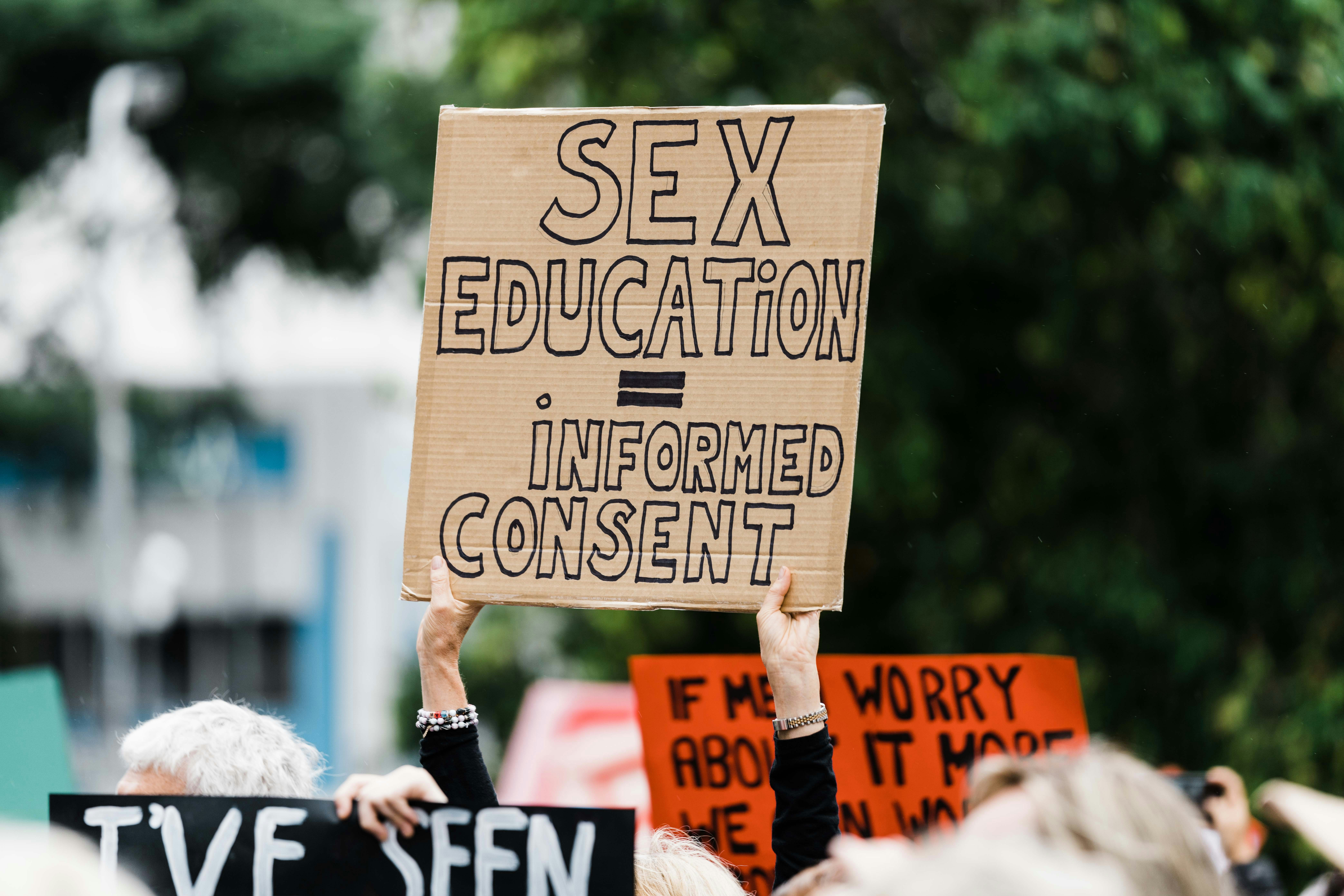
India may finally make sex education mandatory, and Chechi has one demand: start at three, not fourteen. At three it isn't about sex at all. It's a child knowing the real names of their body, that it belongs to them, and that their no counts. Words are the kindest thing we can hand them.
This piece discusses child sexual abuse. If you or a child you know needs help, India's national child helpline is 1098 (Childline), free, 24 hours a day.
The Union government told the Supreme Court this week that it wants age-appropriate Comprehensive Sex Education in schools and colleges across India. Additional Solicitor General Aishwarya Bhati made the submission to Justices B V Nagarathna and R Mahadevan. A 26-member expert committee of ministries, child rights groups, lawyers, psychologists and doctors recommended it, and the Centre says it accepts.
I have waited a long time for this.
I am also braced for disappointment, because this country has walked up to this line before and turned around. So let me tell you the thing that will decide whether it works.
The number that should end the argument
Your amma taught you to fear strangers. Don't talk to them, don't take sweets, don't get into the car.
The National Crime Records Bureau's Crime in India 2024 report counts 44,126 cases under Sections 4 and 6 of the POCSO Act, the sections covering penetrative sexual assault on minors. In 42,634 of those cases, the child knew the person who did it. That comes to 96.6 percent.
Strangers account for 1,492 cases, which is 3.4 percent.
In Andhra Pradesh, Himachal Pradesh, Sikkim, Tripura and several other states and union territories, every single registered case involved someone the child already knew.
Nineteen out of twenty. A friend. A neighbour. An employer, a family friend. In 3,658 of those cases, someone inside the family.
We spent thirty years drilling our children about the three percent, while teaching them to obey the ninety-six without question.
This is not new information either. In 2007 the Ministry of Women and Child Development interviewed 12,447 children across 13 states. Fifty-three percent reported one or more forms of sexual abuse. Half named someone in a position of trust or responsibility. Most of them told nobody at all.
Most of them told nobody at all.
And before you picture only daughters, look again at that study. Slightly more than half the children reporting abuse were boys.
We have built our whole idea of this around girls, which means our sons get even less than our daughters do, and they carry the added lesson that boys are not supposed to be hurt or to say so.
They cannot tell you what they have no words for
Picture a child of four. Any child, your niece or your nephew. They know elbow. They know knee. Their grandmom probably taught them a rhyme that names all five fingers and they can do the whole thing with the actions. But everything between the waist and the knees is a soft blur nobody has given them a word for.
"Down there," if it comes up at all, and it comes up in a lowered voice.
Then something happens to them.
They come looking for you. They stand at the kitchen door with a feeling far too big for their body and they open their mouth and find there is nothing in there to say it with. They wait. You are busy, they are quiet, and after a while they go back to their toys.
That is what it looks like. No screaming, no dramatic revelation. A small child at a door who decides there is nothing to tell you, and then grows up.
Now think about when we planned to hand over those words. The Adolescence Education Programme, our last serious national attempt, ran for Classes IX and XI at sixteen hours a year. Class IX. They are fourteen by then.
They stood at that door when they were four.
What "sex education at three" actually means
Say those words in any apartment WhatsApp group and watch a vein appear on somebody's forehead. So let me kill the objection where it stands, because it survives only on a misunderstanding.
Nobody is teaching intercourse to a toddler. The frameworks do not say that. The people claiming they do have not opened them.
The World Health Organization's European office wrote a framework with Germany's Federal Centre for Health Education called Standards for Sexuality Education in Europe. Its first age band is 0 to 4. Here is the whole of it. Tell children the names and functions of all their body parts. Teach body hygiene. Show them that bodies differ. Let them practise naming those parts and washing every one of them. Let them say what they want and do not want. Help them build self-esteem, respect for difference, and a sense that girls and boys are equal.
That is the syllabus people are frightened of. Name your parts. Wash yourself. Say what you want.
UNESCO's International Technical Guidance on Sexuality Education, which the Centre will more likely draw from, starts at 5 to 8 and runs in bands up to 15 and 18-plus. Consent, privacy and bodily integrity sit inside its key concept on staying safe, from the youngest band onward.
So when you ask for sex education at three, you are asking that a child knows the real name of every part of their body, knows that body belongs to them, and knows they may say no and be believed. Point to the corrupting bit, edi. I will wait.
Good touch, bad touch needs an upgrade
Our schools deserve some credit here. Good touch, bad touch moved us forward and I will not sneer at it.
But hold it up against that 96 percent. The binary assumes the wrong touch will feel wrong. When it is an uncle, a tuition sir, a cousin, someone the child loves and has been told to respect, the touch arrives wrapped in affection and authority. It confuses them. They wait for the clear bad feeling the poster promised, it does not come, and they keep waiting.
Three things work better alongside it.
Real names, said in your ordinary voice, so the sentence is ready before it is needed. Body autonomy, which means a child may refuse to hug an aunty and you back them up instead of scolding them, because a child who learns that their no gets overruled whenever refusing is socially awkward has learned the lesson we least want them to have. And a rule about secrets: surprises are fine, surprises end, but nobody gets to ask a child to keep a secret about their body from you.
Grooming runs on secrecy. A child who knows that secrets about their body always get reported has somewhere to walk.
"But it will corrupt them"
This objection has killed every previous attempt, so I will meet it rather than talk around it. Parents who say it love their children. They can also be course-corrected.
The WHO's position, drawn from systematic reviews, is that good comprehensive sexuality education delays sexual initiation, reduces risk-taking and raises contraceptive use, with no evidence that it increases sexual activity or pulls it earlier. UNESCO reports the same: it does not hasten sex, it improves safer behaviour, it can delay first sex.
UNESCO also found that programmes teaching abstinence as the only option fail to delay first sex, fail to reduce how often young people have sex, and fail to reduce the number of partners. Programmes covering both delay and protection beat them.
So "just tell them not to" has been measured. It loses. We keep choosing it and calling that caution, when caution would mean picking the thing that works.
We have been here before
When the Adolescence Education Programme arrived in 2007, parents, teachers and politicians objected, and six states banned it outright. The argument then was that it corrupts youth and offends Indian values.
Hold that phrase up to the light for a moment. The civilisation whose values were supposedly under threat is the one that produced the world's most famous treatise on desire. We did not import this discomfort from anywhere. We made it ourselves, fairly recently, and then we started calling it tradition.
What I want, and what you can do
The Centre's submission says the right things. It calls CSE broader than reproductive health, covering emotional well-being, gender sensitivity, decision-making and mutual respect. The expert committee asked for child sexual abuse awareness to sit inside the programme so children can spot warning signs and report without shame.
Good. Now hold them to three things.
Start before Class 9. Body names, body autonomy, the right to refuse, the rule about secrets. Nursery. Age three. Layer the rest on later, in the bands UNESCO already mapped. Waiting until fourteen leaves a decade uncovered, and abusers do not observe the school calendar.
Teach the yes, not only the no. Consent is a skill, and skills need years. A child whose no counts at three becomes a teenager who understands that their yes means something, and an adult who can tell wanting something from going along with it. One horrified lecture in Class 9 cannot build that. Ten years of you backing them up when they refuse a hug can.
Train the teacher. A curriculum is worth as much as the person standing in front of the class who has to say the words out loud, and we are asking teachers raised in the same silence to speak. That needs training, and it needs parents who do not march to the principal's office.
Which brings me to you.
Whatever the Supreme Court decides, a child's first sex education happens at home. It is in whether you use the real word or the shy word. It is in whether you make them hug the uncle and aunty they are twisting away from. It is in whether they believe, at three, that if they tell you something frightening you will believe them and not ask them to stay quiet for the family's good name.
We were told nothing and worked it out anyway. Wrongly, late, from the internet.
The children around you do not have to repeat that. Give them the words now and they will never have to stand at a door with nothing to say.
Teach them all of them.
Sources
- The Logical Indian (14 July 2026): Centre tells Supreme Court it plans mandatory age-appropriate Comprehensive Sex Education; Justices B V Nagarathna and R Mahadevan; ASG Aishwarya Bhati; 26-member expert committee; arises from SC directive on POCSO implementation — https://thelogicalindian.com/sex-education-mandatory-in-school/
- NCRB, Crime in India 2024, via India Today NE: 44,126 cases under POCSO Sections 4 & 6; 42,634 known offenders (96.6%); 1,492 unknown (3.4%); 3,658 family members; states reporting all cases as known offenders — https://www.indiatodayne.in/national/story/close-acquaintances-behind-966-per-cent-of-child-sexual-abuse-cases-ncrb-1388512-2026-05-07
- FACTLY analysis of NCRB POCSO data: at least 96% known offenders across five years — https://factly.in/pocso-cases-in-india-adolescents-and-known-offenders-dominate-the-data/
- Ministry of Women and Child Development (2007), via Feminism in India: 12,447 children across 13 states, 53% reported one or more forms of sexual abuse, 50% by someone in a position of trust, most never reported — https://feminisminindia.com/2020/03/11/national-education-policy-draft-sexuality-education/
- WHO Regional Office for Europe & BZgA, Standards for Sexuality Education in Europe: age band 0-4 matrix — https://www.icmec.org/wp-content/uploads/2017/03/WHO-Curriculum-Matrix-for-CSE-in-Europe.pdf
- WHO/BZgA FAQ answering criticism of the 0-4 band — https://whocc.bioeg.de/fileadmin/user_upload/FAQ_WHO_BZgA_Standards_English.pdf
- UNESCO, International Technical Guidance on Sexuality Education: bands 5-8, 9-12, 12-15, 15-18+; Key Concept 4 Violence and Staying Safe, topic 4.2 Consent, Privacy and Bodily Integrity — https://www.unfpa.org/sites/default/files/pub-pdf/ITGSE.pdf
- WHO fact sheet, comprehensive sexuality education: delays initiation, reduces risk-taking, no evidence of increased sexual activity; abstinence-only weaker — https://www.who.int/news-room/fact-sheets/detail/comprehensive-sexuality-education
- UNESCO on CSE: does not hasten sexual activity, can delay sexual debut; abstinence-only programmes ineffective at delaying debut, reducing frequency or partner numbers — https://www.unesco.org/en/health-education/cse
- Adolescent sex education in India: Current perspectives (PMC): banned in six states — Maharashtra, Gujarat, Rajasthan, Madhya Pradesh, Chhattisgarh, Karnataka; "corrupts the youth / offends Indian values" — https://pmc.ncbi.nlm.nih.gov/articles/PMC4711229/
- MedBound Times: AEP ran for Classes IX and XI, minimum 16 instructional hours a year — https://www.medboundtimes.com/medbound-blog/sex-education-controversy-india-2007-aep
- Wikipedia, Sex education in India: Madhya Pradesh CM removed sex education in May 2007 on the advice of RSS ideologue Dinanath Batra, who proposed yoga instead — https://en.wikipedia.org/wiki/Sex_education_in_India