

How to Leave a Situationship (Actually)
.jpeg)
Leave a situationship when it gives you closeness without clarity, hope without commitment, and just enough attention to stop you from moving on. You do not need a dramatic betrayal or final fight. If the dynamic keeps making you feel confused, small, or permanently on standby, that is enough reason to step away.
A situationship can feel like a relationship in private but leave you confused in real life. Chechi explains how to ask for clarity, leave without over-explaining, detach properly, and stop waiting to be chosen.
Leave a situationship when it keeps giving you closeness without clarity, hope without commitment, and just enough attention to stop you from moving on.
You do not need to wait until you hate him. You do not need a final fight, a dramatic betrayal, or one perfect closing conversation. If the arrangement keeps making you feel confused, small, or permanently on standby, that is enough reason to step away.
Leaving a situationship means accepting what his pattern has already told you, saying one clear thing if needed, removing access, and acting like your peace is not up for negotiation.
What is a situationship, really?
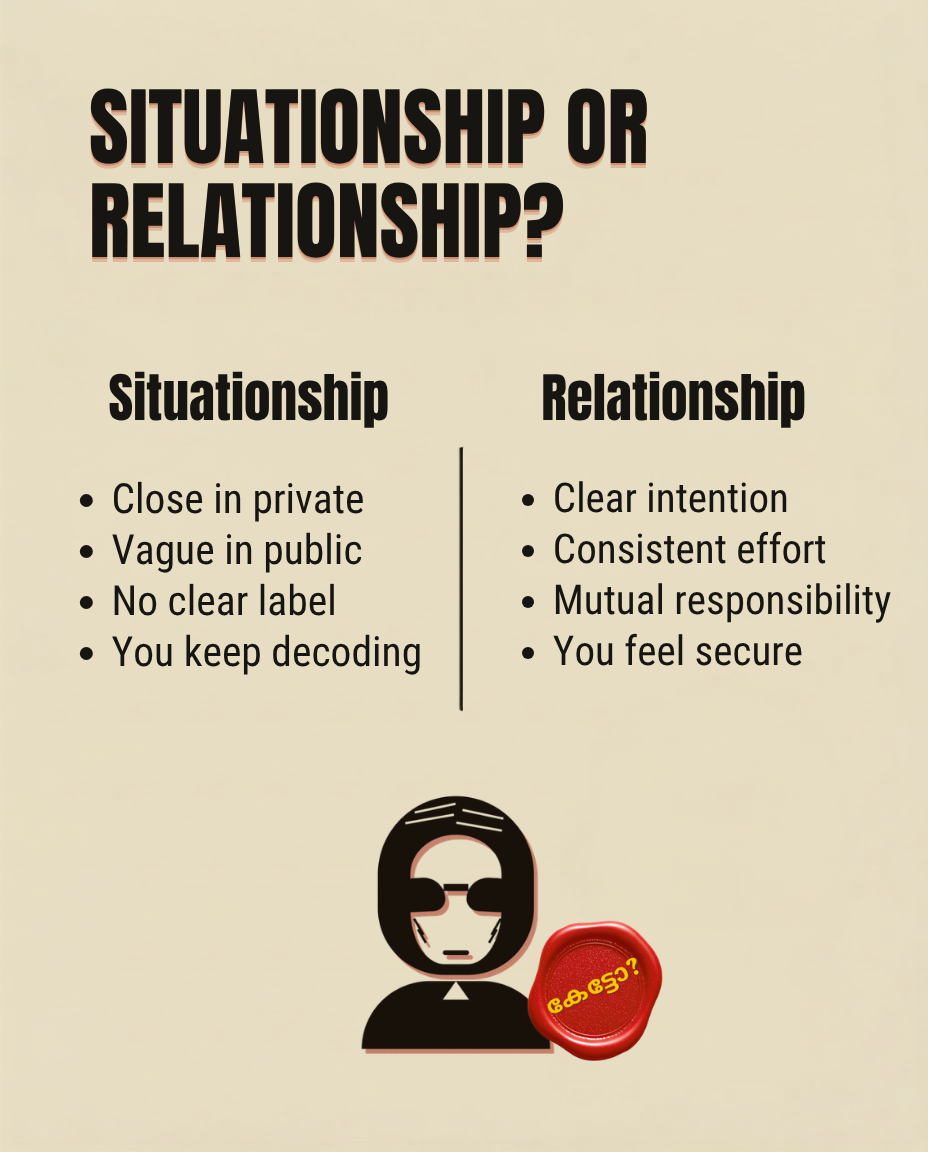
A situationship is a romantic or emotional connection that behaves like a relationship in private but avoids the responsibility of one in real life.
You may talk every day, share feelings, meet often, flirt, sleep together, make future-ish plans, and still have no clear answer to the most basic question: “What are we?”
That is the trap. It feels intimate enough to keep you attached, but undefined enough for him to avoid accountability.
A situationship can sound like:
- “Let’s not label it.”
- “I like what we have.”
- “Why complicate things?”
- “I am not ready for anything serious.”
- “Let’s just see where it goes.”
- “You know I care about you.”
- “I do not want to lose you.”
Some of these lines can be honest. Some can be convenient. What matters is not whether he sounds sincere in the moment. What matters is whether the connection gives you the safety, clarity, and consistency you need.
If you keep needing to decode the same man every week, mole, that is already information.
How do you know it is time to leave?
It is time to leave when the situationship costs you more peace than it gives you joy.
Do not measure it only by the good moments. Of course there are good moments. If it were all terrible, you would have left already. The confusing part is that he may be sweet, funny, attractive, affectionate, and emotionally available in small bursts. The problem is the overall pattern.
You may need to leave if:
- You are scared to ask where this is going
- You feel needy for wanting basic clarity
- He gives affection but avoids commitment
- You keep accepting less than you want
- You feel calm only after he texts
- He disappears and returns like nothing happened
- You are waiting for him to choose you properly
- You keep lowering your expectations to keep him around
The clearest sign is this: you are no longer enjoying the connection as it is. You are surviving it because of what you hope it could become.
Hope is sweet, but it is not a relationship.
Why is leaving a situationship so hard?
Leaving a situationship is hard because there is usually no clean ending. There may be no official breakup, no anniversary, no public commitment, no shared language for the loss. Still, your heart got involved.
That makes you feel silly sometimes. You may think, “How can I be this hurt over someone who was never even my boyfriend?”
Because access creates attachment. Routine creates attachment. Vulnerability creates attachment. Physical intimacy can create attachment. Waiting creates attachment too, though nobody warns you about that one.
Situationships are especially sticky because they keep giving you small rewards. A sweet message after three dry days. A long call after you had almost given up. A sudden “I miss you” when you were finally angry enough to leave.
That inconsistency can make your mind work harder, not less. You keep trying to win back the good version of him.
Chechi will say this plainly: love should not feel like trying to get promoted in a company that never issued you an offer letter.
Should you ask for clarity before leaving?
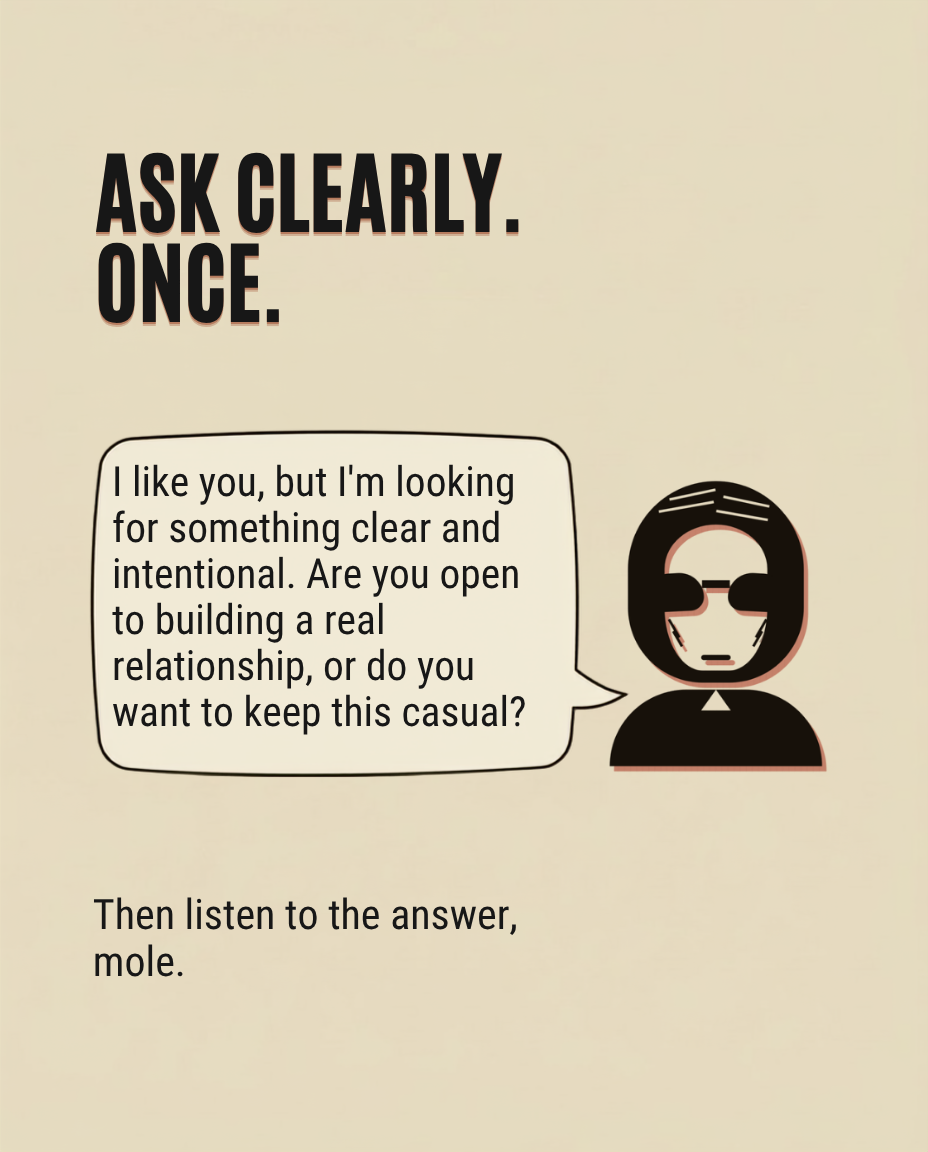
Ask for clarity once if you have not asked clearly before. Do not keep asking the same question in five different outfits.
A clean clarity conversation is not begging. It is you giving the connection one honest chance to meet you in daylight.
You can say:
“I like you, but I am looking for something clear and intentional. Are you open to building a real relationship, or do you want to keep this casual?”
Then let him answer.
Not just with words. With steadiness.
If he says he is confused, not ready, scared, busy, healing, complicated, or “bad at labels,” listen. Do not start translating his hesitation into a secret yes. A maybe that keeps you waiting is still not the answer you need.
If he says he wants you but does not change anything, that is also an answer.
One clarity conversation is enough. After that, repeating the question becomes a way of postponing the decision you already know you need to make.
What should you say when ending a situationship?
Say less than your emotions want and more clearly than your fear allows.
You do not need to write a speech that proves you were hurt correctly. You do not need to make him understand every night you spent staring at your phone. Your message should close the loop, not reopen negotiations.
Try this:
“I have realised I want something clear and committed, and this connection is not giving me that. I need to step away so I can move on. I wish you well, but I will not be continuing this.”
That is enough.
If you want it softer:
“I care about you, but this dynamic is not working for me anymore. I want a relationship with clarity and consistency. Since we are not on the same page, I am going to step back.”
If he has been disrespectful, keep it even shorter:
“This is no longer working for me. I am stepping away and I do not want to continue contact.”
No emotional thesis. No 12 screenshots. No paragraph that begins with “I do not know if you even realise...” and ends with you crying into your own courage.
Your closure message is not a courtroom submission. It is a door closing.

What if he says he does not want to lose you?
Believe the pattern, not the panic.
Some people become very emotional when they feel access slipping away. Suddenly he has words. Suddenly he says he cares. Suddenly he wants to talk. Suddenly he says you are important.
Maybe he means it. Maybe he is afraid of losing the comfort you gave him. Either way, the question is not “Does he feel something?” The question is “Can he offer what I need?”
If he says, “I do not want to lose you,” you can say:
“I understand. But I have been clear about what I need, and this has not been moving in that direction. I need to choose myself now.”
If he says, “Why are you making this so serious?” you can say:
“Because my feelings are involved, and I do not want to stay in something undefined.”
If he says, “Can we still be friends?” you can say:
“Not right now. I need space to move on.”
Do not let his discomfort become your assignment.
Should you stay friends after a situationship?
Usually, not immediately.
Friendship sounds mature, but sometimes it is just a side door back into the same attachment. You say you are friends, but you still wait for his texts, still notice his tone, still feel jealous, still dress carefully when you know he will be there, still hope he realises what he lost.
That is not friendship. That is a situationship wearing a cotton kurta and pretending to be harmless.
Take space first. Real friendship can only happen after the emotional charge has settled. You should be able to hear about his life without feeling punched in the stomach. You should be able to meet him without performing. You should be able to say no without secretly hoping he misses you.
Until then, distance is kinder.
If he genuinely respects you, he will respect the space. If he punishes you for needing it, that tells you why the space was necessary.
How do you actually detach after leaving?
Detachment is not one grand decision. It is a series of small refusals.
You refuse to check whether he watched your story. You refuse to keep his chat pinned. You refuse to analyse his silence. You refuse to dress your loneliness up as “just checking in.” You refuse to let one weak evening make decisions for the woman who fought so hard to leave.
Start here:
- Mute or block him if seeing him pulls you back
- Delete or archive the chat
- Stop rereading old messages
- Remove songs, photos, and reminders from easy reach
- Tell one trusted friend you are stepping away
- Make evening plans for the first few weekends
- Write down the full truth of the situationship, not only the sweet parts
That last one matters. Your memory will edit him when you miss him. It will show you the jokes, the chemistry, the tenderness, the one night he held your hand like he meant it. So write the full version. Include the waiting. Include the confusion. Include the times you made yourself smaller.
When the fantasy returns, read the full file.
What if you miss him?
You probably will. Missing him does not mean leaving was wrong.
You can miss someone who was not good for your peace. You can miss the attention, the routine, the chemistry, the private jokes, the version of yourself that felt wanted around him. You can miss the hope most of all.
When the urge comes, do not argue with it for two hours. Give it something practical to do.
Text a friend: “I want to message him. Please distract me.”
Walk for ten minutes.
Eat something proper.
Write the message in Notes and do not send it.
Read your reasons for leaving.
Sleep before deciding anything.
A lot of bad decisions happen when you are hungry, lonely, tired, and holding your phone like it is a rescue boat.
Mole, put the phone down first. Think after.
What if he comes back later?
If he comes back, do not restart the situationship just because he sounds softer.
Ask what has actually changed. Not what he misses. Not what he regrets. Not how lonely he felt after you left. What has changed?
You can ask:
“What are you looking for now?”
“What would be different this time?”
“Are you ready for a committed relationship?”
“How will we avoid falling into the same undefined pattern?”
If his answers are vague, stay away. If he wants access before clarity, stay away. If he says, “Let us not pressure it,” remember where that road took you last time.
A real return should come with real accountability. He should be able to name what happened, respect the space you took, and offer clarity without making you drag it out of him like a stubborn suitcase.
Do not re-enter the same room because he changed the lighting.
What if you are scared no one else will feel like him?
That fear is common, but it is not a prophecy.
Chemistry can make one person feel irreplaceable. So can uncertainty. So can wanting someone who keeps staying slightly out of reach. The intensity may feel like proof, but sometimes it is just your nervous system working overtime around inconsistency.
You are not looking for a weaker love. You are looking for a steadier one.
The next person may not give you the same stomach flips caused by confusion. Good. Peace can feel less dramatic at first because it is not constantly making you audition.
Do not confuse intensity with intimacy. The right relationship should not require you to abandon your needs to keep the connection alive.
You are not losing your only chance. You are leaving a half-open door so you can walk toward a room with lights on.
Common mistakes when leaving a situationship
The first mistake is trying to leave while still trying to be chosen.
You cannot say goodbye and keep auditioning in the same breath. If the hidden goal is to make him finally realise your worth, you are still inside the loop.
Other common mistakes:
- Sending a long goodbye and then replying to every response
- Asking for clarity again after he has already avoided it
- Accepting “I care about you” as a substitute for commitment
- Staying friends before you have detached
- Checking his profile to see if he misses you
- Romanticising his potential instead of looking at his behaviour
- Keeping the situationship secret because you know your friends will tell you to leave
- Calling the bare minimum “progress”
The way out is not to become hard. The way out is to become clear.
Clear with him. Clear with yourself. Clear with the part of you that keeps saying, “But what if?”
A simple exit plan
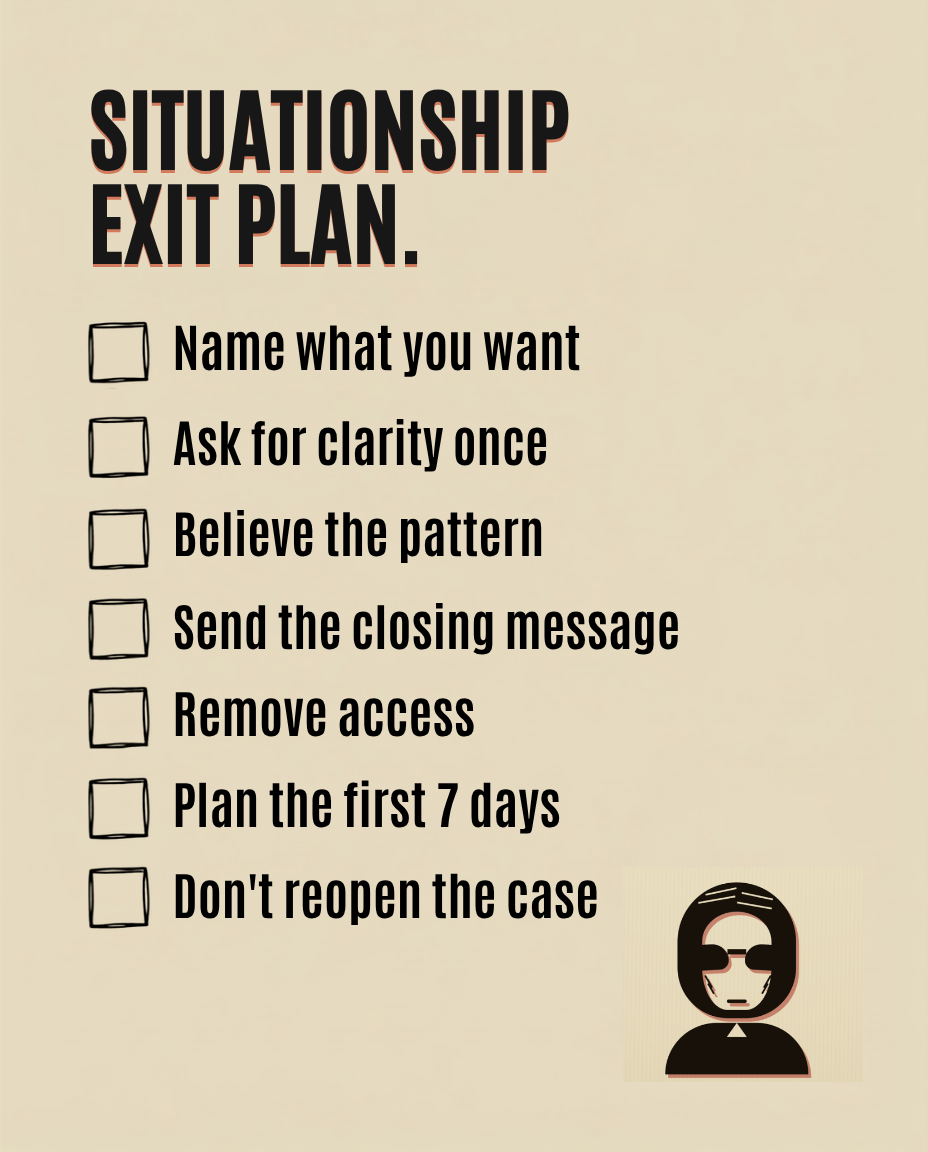
Use this if you know you need to leave but keep postponing it.
Step 1: Name what you want
Write it down: “I want a clear, committed, consistent relationship.”
Step 2: Compare that with what is happening
Be honest. Is this connection giving you what you want, or only enough hope to keep waiting?
Step 3: Have one clarity conversation if needed
Ask directly whether he wants the same thing. Do not soften the question so much that he can slide around it.
Step 4: Send the closing message
Keep it short, kind if possible, and final.
Step 5: Remove access
Mute, block, archive, delete shortcuts, and stop checking for signs.
Step 6: Plan the first seven days
Evenings, weekends, and lonely pockets are danger zones. Fill them before they fill themselves with him.
Step 7: Do not reopen the case every time you miss him
Missing him is part of leaving. It is not evidence that the situationship was secretly right for you.
Chechi’s advice
Mole, leaving a situationship can feel strange because there may be nothing official to announce and still so much to grieve.
But your heart knows when it has been waiting too long.
You do not need to hate him to leave. You do not need to prove he is terrible. You do not need a committee, a scandal, or a final piece of evidence. Wanting clarity is enough. Wanting consistency is enough. Wanting to stop feeling like a guest in your own love life is enough.
Let him be unsure somewhere else.
You come home to yourself.